
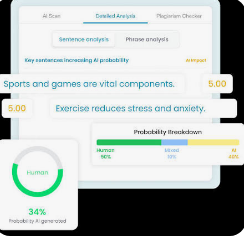
Paste a paragraph, press a button, and a number appears: “73% AI-generated.” It feels like a verdict, but it isn’t one. An ai detector is closer to a smoke alarm than a courtroom judge. It can warn you that something might be wrong, but it cannot tell you who lit the match. Knowing that difference helps whether you are grading essays, editing freelancers, or checking your own drafts.
What an AI Detector Actually Measures
An AI detector does not hunt for a hidden watermark. It studies how a text is built and compares those habits with patterns found in known human and machine writing. The output is a probability, not a fact.
Predictability of Word Choice
Language models generate text by selecting likely next words. Writing that stays consistently expected, with few surprises, looks machine-made to a detector. Human writers drift, joke, repeat themselves, and reach for odd words.
Sentence Rhythm
Real writing has an uneven pulse. A short line. Then a longer one that wanders through a couple of ideas before it lands. Many AI content detector tools measure this variation, often called burstiness.
Learned Patterns
Most modern systems are classifiers trained on millions of labeled samples. They pick up habits such as tidy transitions, evenly sized paragraphs, and cautious phrasing that readers rarely notice.
Why Every AI Detector Gets Things Wrong
The False Alarm Problem
Polished, formal, or simple writing can be mistaken for machine output. Non-native English speakers, technical writers, and people who follow strict style guides get flagged more often. A wrongful flag can cost someone a grade or a reputation.
The Evasion Problem
Light rewriting, personal anecdotes, or reordered sentences can drop an AI detection score sharply. A low number therefore doesn’t prove a human wrote the text.
The Moving Target Problem
Language models keep improving, and detectors are always a step behind. An accuracy claim from last year may not hold today.
Where an AI Detector Is Genuinely Useful
Used well, these tools earn their place:
- Teachers can use a flag to open a conversation, not close a case.
- Editors can spot bland, templated submissions that deserve a closer read.
- Marketing teams can audit blog posts that feel generic.
- Writers can find robotic-sounding passages and rewrite them with more voice.
A Smarter Workflow for AI Detection Tools
- Check longer samples. Under a couple hundred words, results are mostly noise.
- Compare more than one tool. Wide disagreement signals uncertainty.
- Gather other evidence. Drafts, edit history, and research notes say far more than a percentage.
- Ask the author to explain. Someone who wrote the piece can discuss its choices easily.
- Never decide on a score alone. Treat it as one input among many.
How to Pick a Reliable AI Detector
Look for honesty about limits. Good providers publish accuracy information, explain their false positive rates, and avoid promising perfection. Check which languages are supported, how your uploaded text is stored, and whether the report highlights specific passages instead of showing only a single number. Anything advertising “100% accuracy” deserves skepticism.
Writing a Voice No Tool Can Doubt
The best protection against a wrongful flag is a distinctive voice. Add specific details, firsthand experience, and real opinions, and keep your drafts and notes. That kind of writing serves readers better, and it also tends to read as human to any AI detector.
Conclusion
The ai detector is a helpful but imperfect instrument. It can point your attention toward text worth a second look, yet it cannot establish authorship by itself. Pair it with context, evidence, and a respectful conversation, and it becomes a valuable part of your toolkit. Treat it as a judge, and sooner or later it will punish someone innocent. Treat it as a smoke alarm, and it does the job it was built for: telling you when to look closer.